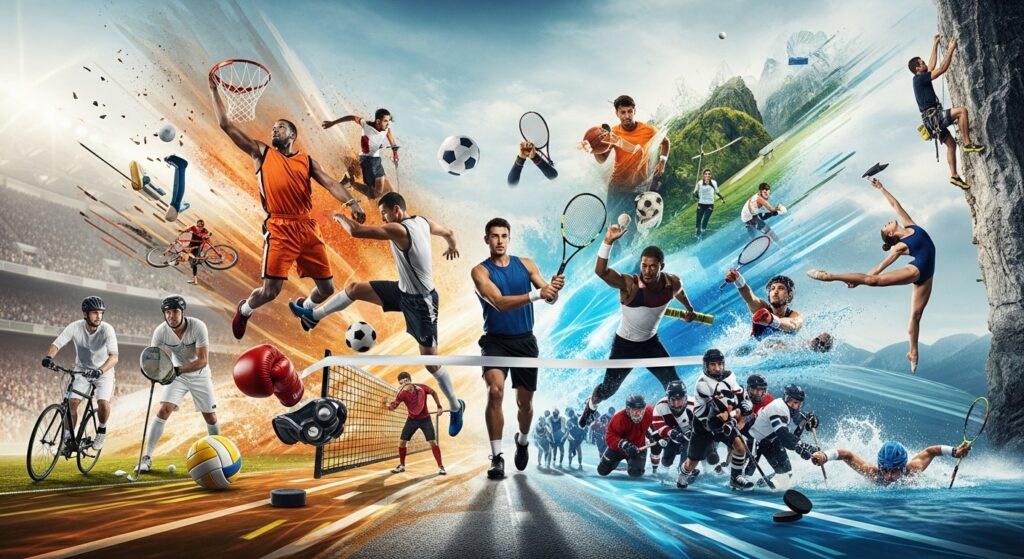
Sports have always been an essential aspect of human civilization, transcending generations, cultures, and countries. They offer an arena for competition, physical exertion, and, importantly, for human spirit to shine. Sports were not only seen as a form of entertainment but as a method to bring people together, test human limits, and build community. From the earliest forms of physical contests in ancient times to the modern-day spectacles, sports have grown exponentially. The last few centuries alone have seen an incredible transformation in the way sports are organized, played, and consumed. In this blog post, we will explore the origins of sports, their evolution over time, the rise of professional sports, and the impact of technology on sports today.
The Origins of Sports: From Rituals to Competitions
The history of sports stretches back to the early days of human civilization. While it’s difficult to pinpoint an exact starting point, evidence shows that early humans engaged in various physical activities for survival, entertainment, and ritual purposes. Ancient forms of sporting events can be seen as precursors to the modern sports we recognize today. These activities were not necessarily organized competitions but rather physical displays for various purposes.
Ancient Civilizations and Their Sporting Practices
In ancient civilizations such as Mesopotamia, Egypt, China, and the Indus Valley, there are records of physical contests, often linked to religious practices or preparation for war. Ancient Egyptians, for instance, practiced archery, swimming, and wrestling, and such activities were vital for their military and spiritual practices. In ancient China, martial arts like Kung Fu began to take shape, combining physical training with philosophical teachings.
However, it was the ancient Greeks who arguably made the most significant contributions to the development of organized sports. The ancient Greek Olympics, held every four years at Olympia, were perhaps the first well-documented sporting events in history. The ancient Olympics celebrated human strength and skill, with competitions such as foot races, wrestling, boxing, and chariot racing. The Games were dedicated to the Greek god Zeus and were considered the pinnacle of athletic achievement in ancient Greece.
The Romans and Gladiatorial Games
While the Greeks focused on athletic prowess, the Romans were more interested in large public spectacles. Roman gladiatorial contests, which began as part of funeral rites, evolved into violent and bloody sports designed to entertain the public. Gladiators, often slaves or criminals, would fight to the death in arenas such as the Colosseum. Though brutal by today’s standards, these contests were central to Roman culture and helped shape the evolution of public sports and entertainment.
The Rise of Modern Sports: The 19th Century
The 19th century marked the beginning of the modern era of sports. As societies evolved, so did the concept of organized physical competition. Many of the sports we know and love today started taking their modern form during this period. The Industrial Revolution, the expansion of the British Empire, and the rise of nationalism all contributed to the globalization and formalization of sports.
The Birth of Modern Team Sports
During the 19th century, many team sports began to take shape, with standardized rules that allowed for organized competition. Perhaps the most iconic example of this development is soccer, known as football outside of the United States. The modern form of soccer began in England in the mid-1800s when various schools and clubs began creating their own rules for the game. In 1863, the English Football Association was formed, and soccer’s first standardized rules were established. This led to the formation of professional leagues and the spread of the sport across the globe.
In North America, the 19th century saw the emergence of baseball and American football. Baseball, widely considered America’s pastime, evolved from a combination of European bat-and-ball games. The National League, founded in 1876, provided a structure for professional baseball in the United States, and the sport quickly gained popularity both at home and abroad. Meanwhile, American football grew out of rugby and became uniquely American as college teams began to form and compete.
Rugby itself was another sport that gained momentum during this period. The game was formalized in the 1820s at Rugby School in England, and it quickly spread to other countries. The first rugby union was formed in 1871, and the sport’s popularity surged, especially in countries like New Zealand, South Africa, and Australia.
Individual Sports and the Pursuit of Personal Glory
While team sports were developing, individual sports also gained prominence during the 19th century. Tennis, for instance, can trace its origins to France in the late 1800s, with Wimbledon—the oldest tennis tournament—first held in 1877. It soon became one of the four Grand Slam tournaments and remains the most prestigious tennis event today.
Boxing also saw formalization in the 19th century, with the creation of the Marquess of Queensberry Rules in 1867. These rules transformed boxing into a more regulated sport, marking the beginning of the modern era of prizefighting. Over the next century, boxing became one of the most popular sports in the world, producing legendary figures such as Muhammad Ali, Mike Tyson, and George Foreman.
The 20th Century: The Globalization and Commercialization of Sports
The 20th century was the era of sports’ global expansion. Thanks to advances in transportation and communication, sports spread to all corners of the globe. Television and radio played a crucial role in broadcasting games to mass audiences, making stars out of athletes and turning sports into multi-billion-dollar industries. This era also saw the establishment of international competitions such as the FIFA World Cup, the Summer and Winter Olympic Games, and the creation of major professional leagues across a wide variety of sports.
The Olympics: A Platform for Global Unity
The modern Olympic Games, revived in 1896 by Pierre de Coubertin, became the most important international sporting event in the 20th century. Initially, only a handful of countries participated, but over time, the Olympics grew to include almost every country in the world. The Games have become a symbol of unity, peace, and international competition. They showcase athletes from all corners of the world competing for glory in a wide array of events.
Women’s participation in the Olympics became a significant milestone in the 20th century. The first female competitors were allowed in the 1900 Paris Olympics, and since then, the Olympics have become more inclusive, with an increasing number of women competing at the highest levels. The addition of sports such as gymnastics, swimming, and tennis to the Olympics also helped elevate women’s sports on the global stage.
The Rise of Professional Sports Leagues
The 20th century also saw the rise of professional sports leagues. Major League Baseball (MLB) in the United States became the blueprint for many other professional leagues around the world. By the mid-20th century, professional soccer leagues were well established in countries like England, Spain, Italy, and Brazil. The English Premier League, founded in 1992, revolutionized soccer by turning it into a global business with broadcasting deals worth billions of dollars.
In basketball, the National Basketball Association (NBA), founded in 1946, became one of the most popular and lucrative sports leagues globally. The NBA’s international success was cemented by superstars like Michael Jordan, whose influence transcended the sport and contributed to the globalization of basketball.
The Impact of Technology on Modern Sports
Technology has revolutionized the way sports are played, managed, and consumed. Over the last few decades, technological innovations have brought about fundamental changes in everything from the performance of athletes to the fan experience.
Advancements in Training and Performance
Athletes today have access to cutting-edge technologies that help them optimize their performance. One of the most significant advancements is the use of wearable devices, which can monitor an athlete’s heart rate, oxygen levels, and even their movement during a game or training session. These devices allow coaches and athletes to collect valuable data that can be analyzed to improve performance and prevent injury.
Video analysis is another game-changer in modern sports. Using cameras and software, coaches can break down an athlete’s technique frame by frame, allowing them to pinpoint areas for improvement. In sports like tennis, basketball, and soccer, video analysis has become an indispensable tool for coaching.
Technology and Fan Engagement
Technology has also transformed the way fans engage with sports. The rise of streaming services has made it possible for fans to watch games from anywhere in the world, and social media platforms have allowed fans to interact directly with their favorite athletes and teams. Virtual reality and augmented reality are starting to change the way fans experience live games, offering immersive experiences that were previously unimaginable.
Live broadcasts have also been revolutionized by advancements in camera technology, with high-definition cameras offering incredibly detailed views of games. Instant replays, slow-motion shots, and even 360-degree views are now standard in most major sporting events.
The Role of Data and Analytics
One of the most significant technological impacts on modern sports is the rise of big data and analytics. From performance metrics to fan engagement, data is now at the heart of sports decision-making. Teams use data to analyze everything from player performance to injury risk, while broadcasters use analytics to provide viewers with deeper insights into the game. Fantasy sports, fueled by data, have also become a multi-billion-dollar industry.
The Future of Sports: Emerging Trends
As we look ahead to the future, the landscape of sports will continue to evolve. From technological advancements to the growth of esports, there are numerous trends that will shape the future of sports.
The Rise of Esports
Esports, or competitive video gaming, has exploded in popularity in recent years. Tournaments like The International (Dota 2) and League of Legends World Championship offer prize pools that rival traditional sports competitions. Esports athletes can make millions of dollars in winnings and sponsorships, and the industry as a whole is expected to continue its growth, with more and more brands entering the space.
The Integration of Technology in Sports Performance
As artificial intelligence and machine learning continue to advance, we can expect to see even more sophisticated tools for improving athletic performance. Smart gear, predictive analytics, and AI-driven training programs will likely become a common part of an athlete’s routine. We may even see the advent of virtual athletes—training simulations that allow athletes to compete in virtual environments, pushing their limits without risk of injury.
Sustainability and Environmental Concerns
With growing concerns about climate change, sustainability in sports will become an increasingly important issue. From the materials used in sports gear to the energy consumed by large stadiums, the sports industry is under pressure to reduce its environmental impact. As fans become more conscious of their carbon footprints, the demand for sustainable practices in sports is likely to rise.
Conclusion: The Enduring Power of Sports
The evolution of sports has been a fascinating journey, from ancient rituals to the global spectacles we witness today. As the world continues to change, sports will undoubtedly continue to evolve, driven by advances in technology, new forms of competition, and the ever-growing connection between athletes and fans. Regardless of these changes, however, the core of sports will always remain the same: the celebration of human strength, skill, and perseverance. Sports, at their best, offer a universal language that transcends borders and unites people in the pursuit of excellence.
In the end, sports will continue to inspire, entertain, and challenge us, reminding us of what it means to strive for greatness both individually and collectively. Whether you are an athlete or a fan, sports have the incredible power to bring us together, to challenge our limits, and to remind us of our shared humanity.